
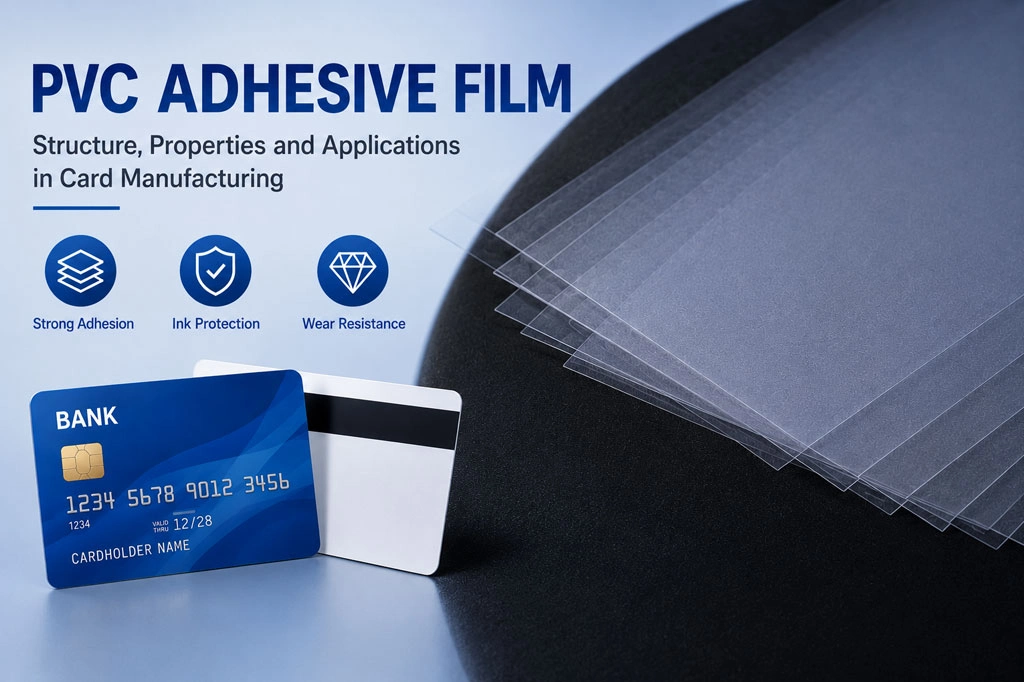
PVC card adhesive film is a composite material used in card manufacturing, consisting of a PVC film coated with an adhesive layer on one side. It is also commonly referred to as PVC laminating film or adhesive-coated PVC film for card manufacturing.
During card production, the adhesive-coated side is placed against a card substrate that has already been printed with ink or incorporated with magnetic recording materials. Under heat and pressure, the adhesive layer forms a strong bond with the printed layer or other functional layers, while the PVC film becomes the protective outer surface of the finished card.
Therefore, PVC adhesive film generally performs two primary functions:
- The adhesive layer bonds with the printed card base or functional layer;
- The PVC film protects the printed graphics and forms the outer surface of the card.
Typical Structure of PVC Adhesive Film
PVC adhesive film generally consists of two main components: a PVC base film and an adhesive layer.
PVC Base Film Layer
The PVC base film forms the protective outer surface of the card. Its main functions include:
- Providing protection against external friction;
- Protecting printed inks;
- Improving the wear resistance of the card surface;
- Enhancing surface flatness;
- Providing a certain degree of structural support to the card body.
The transparency, surface quality, thickness uniformity, and abrasion resistance of the PVC base film can all affect the appearance and quality of the finished card.
Adhesive Layer
The adhesive layer is coated on one side of the PVC base film. During lamination, heat and pressure activate the adhesive layer, allowing it to bond with the printed ink layer or other functional materials.
The adhesive layer should provide:
- Good adhesion to the PVC base film;
- Reliable bonding with printed ink layers;
- Compatibility with the specified heat-lamination process;
- Sufficient peel strength after lamination;
- Long-term bonding performance during card use.
If the adhesive is incompatible with the ink system, the card may appear normal immediately after lamination but develop localized delamination during use or after aging.
Position of PVC Adhesive Film in a Card Structure
A typical multilayer PVC card may use the following structure:
- Upper PVC adhesive film;
- Front printed ink layer;
- PVC card base or intermediate functional layer;
- Back printed ink layer;
- Lower PVC adhesive film.
During lamination, the upper and lower PVC adhesive films bond with the printed layers on both sides, sealing the printed graphics inside the card body.
For magnetic cards, PVC adhesive film may also be used together with materials containing magnetic recording strips. Proper material selection and layer configuration help balance ink protection, magnetic stripe functionality, card flatness, and interlayer bonding strength.
Key Properties of Betterial PVC Card Adhesive Film
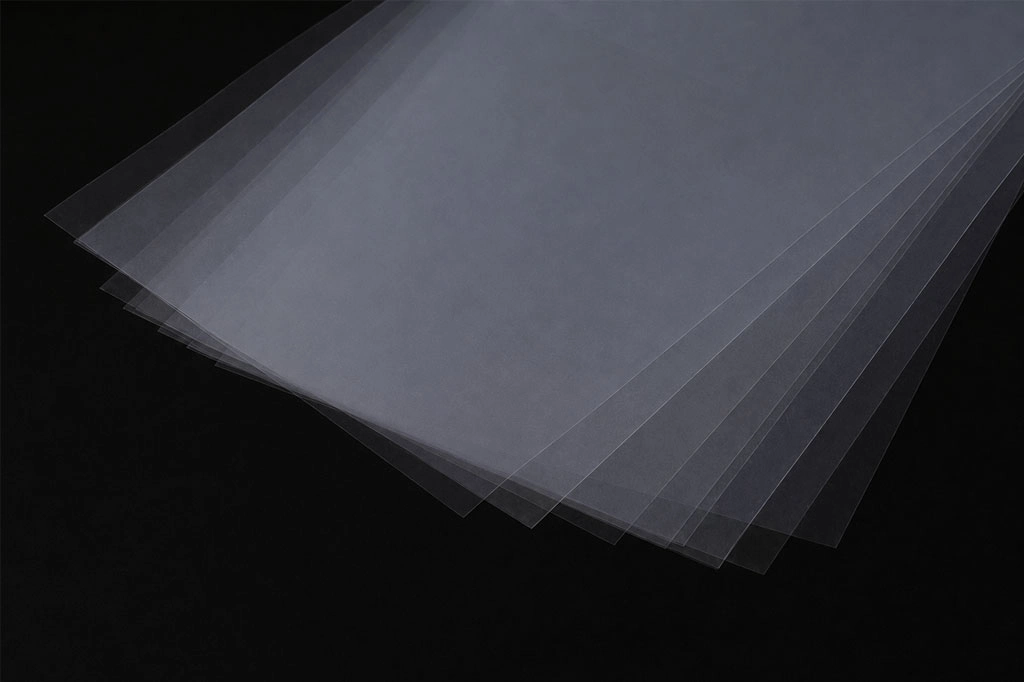
Betterial PVC adhesive film is manufactured using a water-based adhesive coating system. Its main technical specifications and characteristics include:
| Item | Product Description |
|---|---|
| Adhesive System | Water-based adhesive |
| 90° Peel Strength | ≥8 N/cm when bonded to the printed ink layer of magnetic cards |
| Primary Function | Protection of printed ink layers |
| Key Features | Good adhesion, long-lasting peel strength, and good wear resistance |
| Main Process | Heat lamination |
| Applications | Magnetic cards and other card manufacturing applications |
90° Peel Strength ≥8 N/cm
Peel strength is an important parameter for evaluating the bonding performance of PVC adhesive film.
A 90° peel test typically involves peeling a sample of a specified width from the bonded material at approximately a 90-degree angle and measuring the force required per unit width.
Betterial PVC adhesive film provides a 90° peel strength of at least 8 N/cm when bonded to printed ink layers used in magnetic cards. This helps reduce the risk of interlayer delamination during card punching, bending, and everyday use.
However, initial peel strength is not the only consideration. The retention of bonding strength after aging or prolonged use is equally important. Cards may experience temperature fluctuations, humidity, and repeated bending during their service life, making long-term adhesion stability a critical performance factor.
Water-Based Adhesive Coating
Water-based adhesives use water as the primary dispersion medium and are commonly used in adhesive-coated card films.
However, the term “water-based” does not mean that all products provide identical performance. Final bonding performance still depends on factors such as adhesive formulation, coating uniformity, curing conditions, and compatibility with specific inks and card substrates.
Protection of Printed Ink Layers
If the graphics and text printed on a card are directly exposed on the surface, they can gradually become worn, scratched, or contaminated during use.
PVC adhesive film covers the printed layer during heat lamination, sealing the graphics inside the card structure. This reduces direct abrasion of the ink and helps the card maintain a clear and attractive appearance over time.
Good Wear Resistance
Bank cards and consumer cards are frequently placed in wallets, card holders, payment terminals, and card readers. An outer layer with good abrasion resistance helps reduce surface damage caused by repeated friction and extends the effective service life of the card.
Main Applications of PVC Adhesive Film
Bank Cards
Bank cards are frequently carried, inserted into terminals, and handled during everyday use. PVC adhesive film helps protect branding, text, graphics, and printed inks while improving the overall durability of the card.
Magnetic Cards
Magnetic cards contain magnetic recording materials for storing information. PVC adhesive film can be laminated with the relevant card layers through heat and pressure to form the final card structure.
When selecting materials, compatibility between the adhesive film, magnetic stripe material, printed ink layer, and card base should be verified to prevent the lamination process from affecting magnetic stripe positioning or data reading performance.
Membership Cards and Consumer Cards
Membership cards, stored-value cards, gift cards, and loyalty cards often contain extensive branding and colorful printed graphics. PVC adhesive film protects these printed elements, reduces graphic wear, and improves the overall appearance of the card surface.
Access Cards and Other Functional Cards
For access control cards, hotel key cards, and other functional cards based on PVC structures, adhesive film can also serve as an outer protective layer and interlayer bonding material.
For cards containing electronic components, material selection and lamination conditions should be evaluated according to the card structure and the heat resistance of the embedded components.
What Should You Consider When Selecting PVC Adhesive Film?
Adhesion to Printing Inks
Different printing inks vary in resin systems, pigments, additives, and surface characteristics. The same PVC adhesive film may not achieve identical bonding strength with every type of ink.
It is recommended to test the film with each actual ink color used in the project rather than evaluating only white ink or a single printed color.
Peel Strength and Strength Retention
Initial peel strength indicates the bonding condition immediately after lamination, while peel strength after aging provides a better indication of long-term reliability.
In addition to initial peel testing, humidity and heat aging, temperature cycling, or long-term storage tests may be conducted according to project requirements.
Adhesive Coating Uniformity
Uneven adhesive thickness or coating weight may result in localized weak bonding, optical inconsistencies, or deformation of the laminated card sheet.
Consistent coating quality is therefore important for maintaining stable card production.
Surface Wear Resistance and Cleanliness
Because PVC adhesive film may become the final outer surface of the card, the material should be evaluated for scratches, crystal points, impurities, contamination, and overall surface flatness.
Heat-Lamination Process Window
A stable processing window helps reduce production adjustment requirements and improves manufacturing consistency.
When selecting PVC adhesive film, manufacturers should confirm its compatibility with existing laminating equipment, card substrates, printing inks, magnetic stripe materials, and other functional layers.
Batch-to-Batch Consistency
For bank cards and other high-volume card manufacturing projects, consistency in adhesive performance, appearance, and dimensional properties between production batches can directly affect finished-card yield.
Heat-Lamination Process for PVC Adhesive Film
1. Inspect the Printed Layer
Before heat lamination, confirm that the printing ink has been fully dried or cured and that the surface is free from obvious dust, oil, residual solvents, or foreign particles.
Insufficient ink curing may result in weak bonding, color migration, bubbles, or interlayer delamination.
2. Confirm the Adhesive-Coated Side
During layer assembly, the adhesive-coated side of the PVC film must face the printed ink layer or magnetic recording material.
If the film is placed in the wrong orientation, the adhesive layer cannot properly contact the target material, which may result in little or no bonding after lamination.
3. Sheet Layout and Layer Assembly
Arrange the upper adhesive film, printed card substrate, intermediate layers, and lower adhesive film according to the designed card structure.
The upper and lower layers should be kept relatively balanced, while material misalignment, wrinkles, and trapped foreign particles should be avoided.
4. Heat Lamination
The laminating equipment applies controlled temperature and pressure to bond the adhesive layer with the printed surface.
Specific lamination temperature, pressure, and time should be determined according to factors including:
- Adhesive system of the PVC adhesive film;
- Thickness of the PVC base film;
- Ink type and curing method;
- Magnetic stripe or other functional materials;
- Total card thickness;
- Lamination equipment and heating/cooling rates.
5. Cooling and Stabilization
After heating, the laminated card sheet should be cooled under controlled pressure.
Cooling that is too fast, too slow, or uneven may increase the risk of warpage and internal stress.
6. Punching and Inspection
After lamination, the large card sheet is punched into individual cards. Finished cards should then be inspected for:
- Bubbles or foreign particles on the card surface;
- Changes or shifts in printed graphics;
- Card flatness;
- Edge delamination;
- Proper function of magnetic stripes or other functional layers;
- Compliance with required peel strength.
Common Problems and Possible Causes
Delamination After Lamination
Possible causes include:
- Incompatibility between the adhesive film and ink system;
- Insufficient curing of the printing ink;
- Contamination of the printed surface;
- Insufficient lamination temperature, pressure, or time;
- Changes in adhesive performance after storage;
- Improper cooling control.
Bubbles Inside the Card
Bubbles may be caused by residual solvents in the printed layer, moisture in the materials, foreign particles on the surface, insufficient air removal, or inappropriate lamination parameters.
Changes in Ink Color
Color changes may result from insufficient heat resistance of the printing ink, excessive lamination temperature, interaction between the ink and adhesive, or incomplete curing of the printed layer.
Warpage After Heat Lamination
Common causes include unbalanced material thickness between the front and back layers, differences in material shrinkage, uneven temperature distribution, and insufficient cooling or stabilization.
Scratches on the Card Surface
The abrasion resistance of the PVC base film should be checked. Protection during transportation, cutting, layer assembly, lamination, and punching should also be improved to reduce surface damage.
Conclusion
PVC adhesive film is an important protective and bonding material used in the production of bank cards, magnetic cards, and other PVC cards. Through heat lamination, it bonds with printed ink layers or magnetic recording materials, helping protect printed graphics, improve wear resistance, and extend the service life of finished cards.
Betterial PVC adhesive film uses a water-based adhesive coating system and provides a 90° peel strength of at least 8 N/cm when bonded to printed ink layers used in magnetic cards. With good adhesion, long-lasting peel-strength retention, and good wear resistance, it can be used for the lamination and manufacturing of magnetic cards and various other PVC cards.