
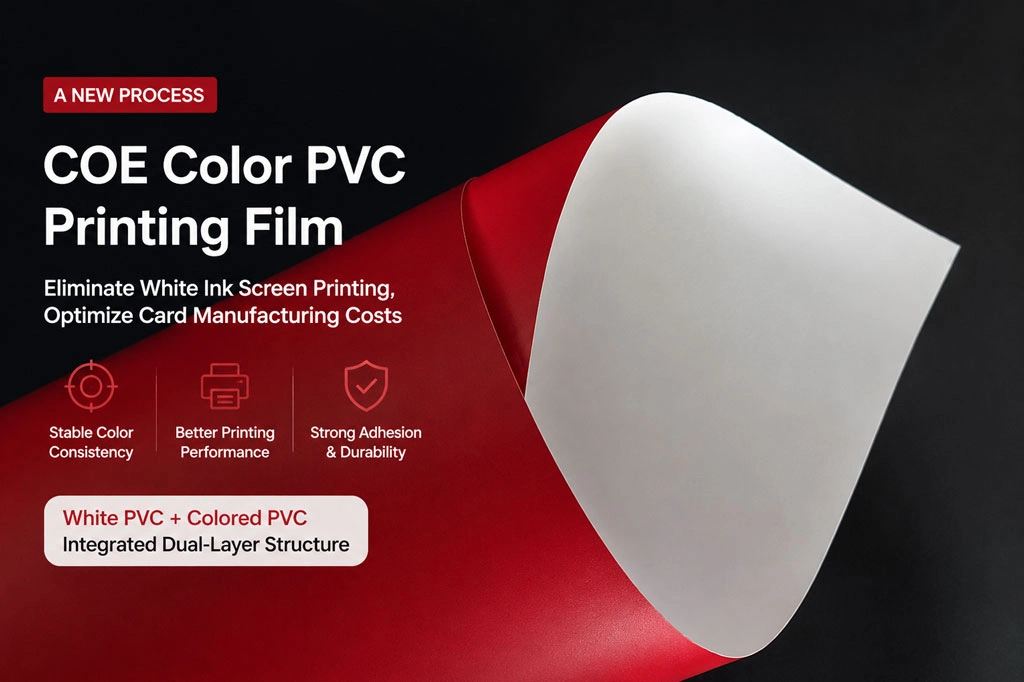
Colored bank cards can strengthen brand recognition through distinctive card base colors and visual designs, making them an increasingly important option for banks, fintech companies, and card organizations seeking differentiated card products.
However, compared with conventional white bank cards, the production process for colored bank cards is generally more complex. When graphics are printed directly onto dark-colored or highly saturated PVC card base materials, the background color of the substrate can interfere with the appearance of the printing inks. To achieve accurate and vibrant colors, conventional manufacturing processes often require a layer of white ink to be screen-printed onto the colored PVC substrate before the final graphics are printed.
Although screen-printed white ink provides the necessary white printing base, it also introduces additional costs associated with materials, equipment, labor, curing, inspection, and rework.
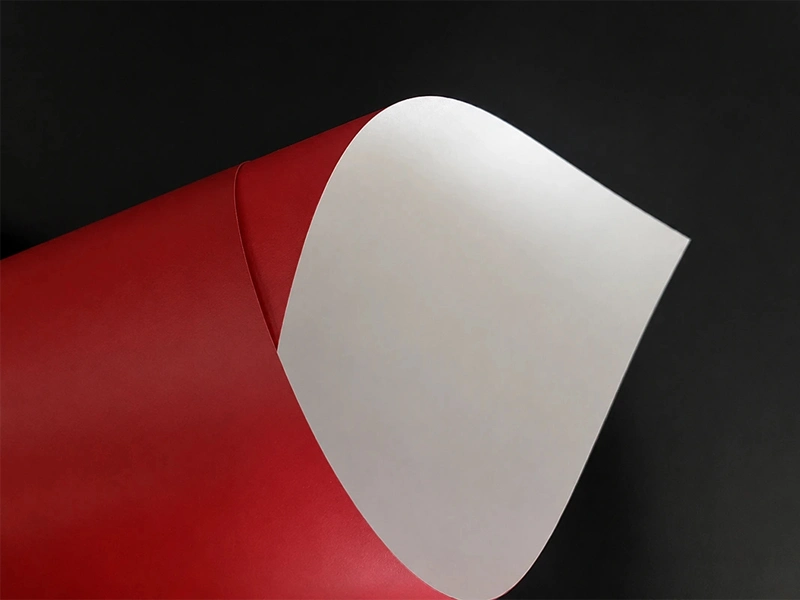
To address this challenge, Betterial has developed COE color PVC printing film, featuring an integrated white PVC + colored PVC dual-layer structure formed in a single film-forming process. The white PVC layer replaces the conventional screen-printed white ink layer, providing a more efficient and stable material solution for colored bank card manufacturing.
Why Do Conventional Colored Bank Cards Require Screen-Printed White Ink?
Conventional colored bank cards generally use a single-layer colored PVC card base. Because the substrate itself has a strong background color, printing graphics directly onto its surface may result in several problems:
- Graphic colors may be affected by the underlying card base color;
- Light-colored areas may appear insufficiently bright;
- Brand colors may not be reproduced accurately;
- The same graphic may appear differently on card bases of different colors;
- Offset printing inks may require repeated adjustment to achieve the target color.
For these reasons, conventional manufacturing processes usually begin by screen-printing a layer of white ink onto the colored PVC card base. The white ink masks the underlying color and creates a white printing base for the final graphics.
A typical process includes:
- Preparing the single-layer colored PVC card base;
- Preparing the screen-printing plate;
- Mixing and screen-printing the white ink;
- Drying or curing the white ink layer;
- Inspecting the thickness, whiteness, and surface condition of the white ink;
- Applying offset printing or other graphic printing onto the white ink layer;
- Layer stacking and hot lamination;
- Die-cutting and personalization.
While this process solves the background-color interference problem, it also introduces additional manufacturing steps and process variables.
What Hidden Costs Does Screen-Printed White Ink Create?
When evaluating the cost of conventional colored card manufacturing, it is not sufficient to consider only the purchase price of white ink. The total cost associated with the entire screen-printing process must also be taken into account.
White Ink and Auxiliary Material Costs
Screen printing requires white ink, printing screens, cleaning agents, and other auxiliary materials. When producing bank cards in multiple colors, manufacturers may also need to adjust white ink usage according to different card base colors and designs.
Equipment and Labor Costs
White ink screen printing occupies screen-printing equipment and requires dedicated operators. Job changes, machine setup, screen installation, and cleaning all increase non-production time.
Drying and Curing Costs
After printing, the white ink normally needs to be dried or cured. This requires additional equipment time and energy consumption while extending the overall production cycle.
Inspection Costs
The whiteness, opacity, thickness, and flatness of the white ink layer can all affect subsequent printing results. Additional process inspections are therefore required.
Rework and Scrap Costs
If the white ink layer develops uneven thickness, screen marks, pinholes, insufficient curing, or batch-to-batch color variation, subsequent graphic printing may fail to achieve the expected result. This can lead to rework or even the scrapping of entire card sheets.
Inventory Management Costs
Card manufacturers must separately manage colored PVC card base materials, white inks, printing screens, and other consumables. White ink also involves requirements related to batch control, storage conditions, and shelf life.
Therefore, the actual cost of conventional colored card manufacturing involves much more than simply “single-layer colored PVC + white ink.” It includes the combined cost of an entire screen-printing process.
How Does COE Color PVC Printing Film Eliminate White Ink Screen Printing?
Betterial COE color PVC printing film features a dual-layer structure:
- Upper layer: white PVC
- Lower layer: colored PVC
The white PVC layer provides a stable and uniform white printing base directly on the colored substrate, allowing it to replace the screen-printed white ink layer used in conventional manufacturing.
Unlike a process in which card manufacturers bond two separate sheets together during downstream production, the white PVC layer and colored PVC layer of COE color PVC printing film are formed together during material manufacturing, creating an integrated dual-layer card base.
During subsequent card production, graphics can be printed directly onto the white PVC layer, eliminating white ink screen printing as well as the corresponding drying, curing, and inspection processes.
How Does COE Color PVC Printing Film Reduce Overall Production Costs?
1. Reduces White Ink and Auxiliary Material Consumption
Because the white PVC layer replaces the conventional screen-printed white ink layer, applicable colored bank card designs can reduce the consumption of:
- White screen-printing ink;
- Screens for white ink printing;
- Ink mixing and cleaning materials;
- Other screen-printing consumables.
If a card design still requires special localized white ink effects, the relevant printing process can be retained. However, the large-area white printing base can be provided by the COE white PVC layer.
2. Reduces Screen-Printing Equipment and Labor Requirements
Eliminating the secondary white ink screen-printing step reduces the time required for screen installation, equipment setup, printing operations, and equipment cleaning.
For high-volume colored bank card projects, fewer production steps can help free up screen-printing capacity while reducing labor input per card.
3. Shortens the Production Cycle
Conventional white ink screen printing involves printing, leveling, drying or curing before the material can proceed to subsequent graphic printing.
COE color PVC printing film allows subsequent printing to be performed directly on the white PVC layer, reducing process transition time and improving overall order turnaround efficiency.
4. Reduces Rework Caused by Color Inconsistency
In conventional manufacturing, the thickness and whiteness of the white ink layer, screen condition, and curing parameters can all affect the appearance of subsequent printed graphics.
COE color PVC printing film provides a stable white PVC printing background at the material level, helping reduce color variation and rework caused by fluctuations in screen-printed white ink.
Betterial COE color PVC printing film offers the following color specifications:
| Technical Parameter | Specification |
|---|---|
| Color difference of COE white PVC layer | ΔE ≤ 1.0 |
| Color difference of COE colored PVC layer | ΔE ≤ 1.5 |
Low color-difference values help improve color consistency both within individual production batches and between different batches.
5. Reduces Ink Adhesion Issues
In conventional structures, subsequent printing inks are typically applied over the screen-printed white ink layer. Final adhesion reliability therefore depends not only on the subsequent printing ink itself, but also on the curing quality of the white ink and the compatibility between the two ink systems.
With the COE solution, white PVC serves directly as the printing layer, allowing subsequent inks to bond directly to the PVC material. The white PVC surface provides better printing performance than a conventional screen-printed white ink layer, making offset colors easier to reproduce while providing more stable ink-to-substrate adhesion and aging resistance.
Reducing interlayer adhesion issues can help minimize losses caused by delamination after hot lamination, ink peeling, and long-term aging failure.
6. Reduces Inventory and Process Management Costs
Conventional processes require manufacturers to separately manage colored PVC card base materials, different batches of white ink, printing screens, and related consumables.
COE color PVC printing film uses an integrated dual-layer structure, simplifying material storage and production preparation. Because the two PVC layers are integrated during material manufacturing, there is no need for downstream bonding between separate base materials. Customers can maintain inventory according to order volumes and color requirements with greater confidence.
How Does COE Color PVC Printing Film Improve Printing Performance?
More Uniform White PVC Layer
Screen-printed white ink can be affected by screen condition, squeegee pressure, ink viscosity, and operating parameters, resulting in variations in layer thickness or surface condition.
The COE white PVC layer is formed during material manufacturing, allowing its surface characteristics and color consistency to be controlled more effectively.
Easier Color Reproduction in Offset Printing
The white PVC surface provides a stable printing base for offset inks, reducing interference from the underlying colored substrate.
This can help improve:
- Brightness of light-colored graphics;
- Accuracy of brand color reproduction;
- Graphic consistency across different card base colors;
- Batch-to-batch consistency within the same order.
Reduced Impact of Screen-Printing Texture
Conventional white ink layers may retain screen-printing textures that can affect the appearance of fine graphics printed afterward. Because the COE white PVC layer does not rely on downstream screen printing, this process variable can be reduced.
Adhesion and Aging Performance of COE Color PVC Printing Film
COE color PVC printing film must not only provide the required initial appearance but also maintain reliable bonding between the white and colored layers after hot lamination, die-cutting, and long-term use.
The adhesion strength between Betterial’s COE white PVC layer and colored PVC card base after aging is ≥20 N/cm.
High and stable interlayer adhesion can help:
- Reduce the risk of delamination after hot lamination;
- Improve overall card structural stability;
- Reduce edge separation during die-cutting;
- Improve long-term reliability during card use;
- Improve material storage and inventory reliability.
This specification refers specifically to the aged adhesion performance between the COE white PVC layer and the colored PVC card base layer. It should not be directly compared with the peel strength between card overlay films and printed ink layers.
Conclusion
Conventional colored bank card manufacturing typically relies on screen-printed white ink to establish a white printing base. This introduces additional costs related to ink, screens, equipment, labor, curing, inspection, and rework.
Betterial COE color PVC printing film uses an integrated white PVC + colored PVC dual-layer structure formed in a single film-forming process, allowing the white PVC layer to replace the conventional screen-printed white ink layer. This enables card manufacturers to eliminate the secondary white ink screen-printing process.
The solution can help improve color and batch consistency, enhance offset printing and ink adhesion performance, shorten production processes, reduce material consumption, minimize rework, and ultimately optimize overall card manufacturing costs.
Betterial COE color PVC printing film provides a white PVC layer color difference of ΔE ≤ 1.0, a colored PVC layer color difference of ΔE ≤ 1.5, and aged adhesion strength of ≥20 N/cm between the white and colored PVC layers, providing a stable integrated card base material for colored bank card manufacturing.