
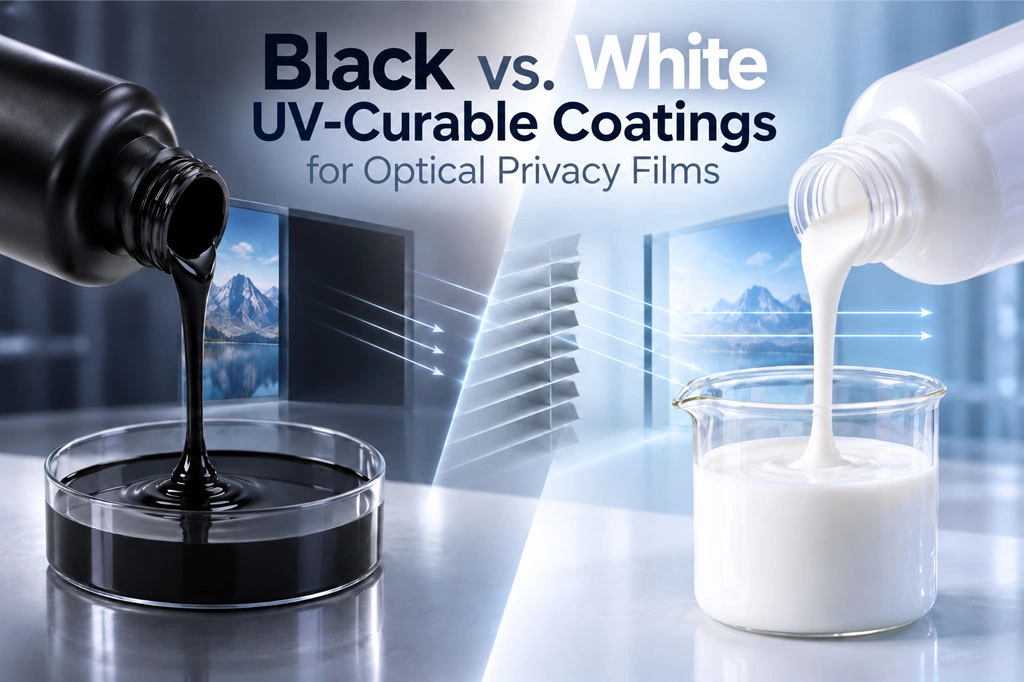
As demand for privacy protection continues to grow across smartphones, tablets, laptops, automotive displays, financial terminals, and other display devices, optical privacy films have become an increasingly important category of functional display films.
In the production of micro-louver privacy films, UV-curable coatings are important materials used to form optical microstructures. Depending on the structural design and optical requirements, manufacturers may use black UV-curable coatings, white UV-curable coatings, as well as transparent or other UV optical materials with specific refractive indices.
So, what are the differences between white and black UV-curable coatings? What roles do they play in privacy films, and how should manufacturers choose between them?
1. How Do UV-Curable Coatings Enable Privacy Protection?
Many optical privacy films currently available on the market rely on micro-louver optical structures to control the direction in which display light travels.
The principle is similar to architectural window blinds. When a user looks directly at the screen, light can pass through the microscopic transmission channels and reach the viewer’s eyes, allowing the screen content to remain clearly visible.
When the screen is viewed from a wider side angle, however, part of the light is blocked or absorbed by the micro-louver structures. As a result, the screen gradually appears darker from the side, limiting visibility and providing privacy protection.
During manufacturing, optical structures measuring tens of micrometers or even smaller can be formed through processes such as imprinting, photolithography, material filling, and UV curing.
After exposure to ultraviolet light, UV-curable materials can quickly transition from a liquid state into a solid structure, fixing the micro-pattern in place. This makes them particularly suitable for high-speed roll-to-roll continuous manufacturing.
Black UV-curable materials and white or other optical UV materials, however, do not necessarily perform the same functions within the privacy-film structure.
2. Black UV-Curable Coatings: Primarily for Light Blocking
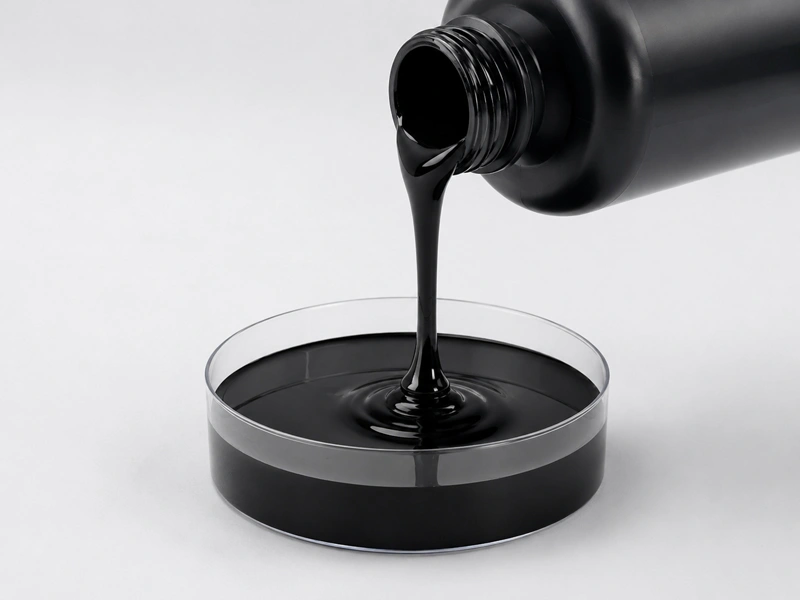
One of the most important functions of a black UV-curable coating is to form the light-absorbing or light-blocking microstructures inside a privacy film.
For example, parallel black stripe structures can be arranged within the micro-louver layer.
Light traveling through the film at a near-normal viewing angle can pass through the transparent channels, while light traveling at a larger oblique angle is more likely to encounter the black structures and be absorbed.
As a result, black UV materials are typically closely related to performance characteristics such as:
- Side-view light-blocking performance
- Privacy viewing-angle control
- Blackness and light absorption
- Optical contrast
- Integrity of the micro-louver structure
- UV curing speed and production efficiency
Some privacy-film manufacturing processes first form black grating structures through UV exposure and then fill the spaces between these structures with another optical material.
Certain privacy-film technologies also specifically use black photocurable materials to create louver or grating structures that block unwanted viewing angles.
In simple terms:
A black UV-curable coating acts like a row of microscopic black blinds inside the privacy film.
Its primary purpose is not to transmit light, but to control which viewing angles are prevented from receiving light.
3. White UV-Curable Coatings: Primarily for Structure Filling and Optical Matching
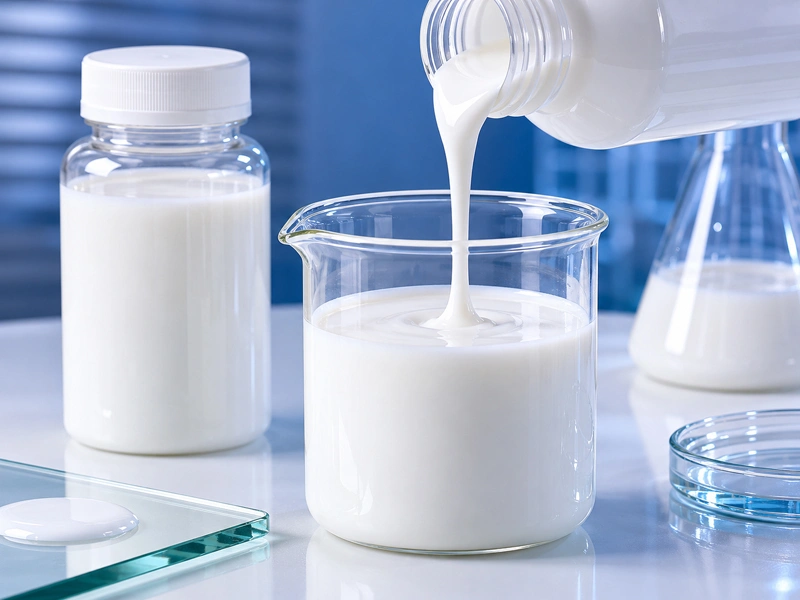
Compared with black UV systems, white UV-curable coatings may serve a different function in certain privacy-film manufacturing processes.
For example, some manufacturing methods first create a black optical grating and then use a white photocurable material to fill the gaps between the black structures while also forming an additional covering or protective structure.
Some privacy-film designs may also use optical UV materials with different refractive indices to control light propagation through a combination of refractive-index differences and microstructure design.
Depending on the specific optical architecture, white UV-curable coatings may therefore place greater emphasis on:
- Microstructure filling performance
- Refractive-index matching
- Optical interface stability
- Coating uniformity
- Imprinting and demolding performance
- Structural stability after curing
- Processing compatibility with PET and other substrates
It is important to note that the term “white UV coating” primarily refers to the material system or the appearance of the uncured liquid.
It should not automatically be interpreted as meaning that the final privacy film contains a visibly white light-blocking layer.
The final optical performance still depends on factors such as formulation, coating thickness, refractive index, microstructure geometry, and the overall construction of the privacy film.
4. White UV-Curable Coating vs. Black UV-Curable Coating
| Comparison Item | Black UV-Curable Coating | White UV-Curable Coating |
|---|---|---|
| Primary Function | Light absorption and light blocking | Filling, structural formation, and optical matching |
| Typical Role in Micro-Louver Structures | Forms black light-blocking gratings | Fills microstructures or forms complementary optical structures |
| Influence on Privacy Performance | Directly related to side-view light blocking | More closely related to light transmission, refraction, and structural integrity |
| Key Performance Indicators | Blackness, curing performance, flowability, flexibility | Refractive index, viscosity, curing performance, and demolding properties |
| Typical Application | Black privacy-film adhesive/coating systems | White privacy-film adhesive/coating systems |
| Directly Interchangeable? | Generally no | Generally no |
Therefore, white and black UV-curable coatings are not simply two color variations of the same material.
The appropriate choice depends on whether the privacy film uses a black micro-louver structure, a filled microstructure, a refractive-index-controlled structure, or another type of composite optical architecture.
5. Betterial WSD-UV-4200 Series UV-Curable Coatings for Privacy Films
To address the different material requirements for black and white UV systems used in various privacy-film microstructures and optical designs, Betterial has developed the WSD-UV-4200B Black UV-Curable Coating and the WSD-UV-4200W White UV-Curable Coating.
The two products are designed for different types of privacy-film microstructure processing.
Both products use one-component acrylate-based UV-curable systems and can be rapidly cured under UV light, making them suitable for continuous and high-efficiency privacy-film manufacturing.
However, they differ in viscosity, optical characteristics, and processing properties.
| Item | WSD-UV-4200B Black UV-Curable Coating | WSD-UV-4200W White UV-Curable Coating |
|---|---|---|
| Appearance | Black liquid | White liquid |
| Base Resin System | Acrylate | Acrylate |
| Viscosity | 60–120 mPa·s | 500–800 mPa·s |
| Solid Content | ≥99% | — |
| Refractive Index | — | 1.50–1.51 |
| UV Light Source | Mercury lamp | 365 nm LED |
| Light Intensity | 400–800 mW/cm² | 500–1000 mW/cm² |
| Curing Energy | 1000–2000 mJ/cm² | 1000–2000 mJ/cm² |
6. White or Black: How Should You Choose a UV Coating for Privacy Films?
If the privacy film uses a conventional black micro-louver light-blocking structure, a black UV-curable material is usually particularly important because the black structures directly absorb and block light traveling at side-viewing angles.
If the manufacturing process requires microstructure filling, optical-interface matching, or the formation of complementary structures, a white UV-curable coating or another specially designed optical UV material with an appropriate refractive index may be required.
In some manufacturing processes, both types of materials may even be used within the same privacy-film system.
For example, a black light-blocking structure may first be formed, followed by filling and structural integration using another UV optical material.
Therefore, when selecting a UV-curable coating for privacy films, manufacturers should evaluate the following factors:
- What type of microstructure is used in the privacy film?
- What is the target privacy viewing angle?
- What level of front-view light transmittance is required?
- How much light-blocking performance is required from the black structure?
- What are the width and depth of the microstructures?
- Is the manufacturing process based on imprinting, filling, or another method?
- Does the production line use a mercury lamp or a 365 nm LED UV source?
- What are the production-line speed and target curing energy?
- What are the requirements for flexibility, demolding performance, and surface appearance?
Stable privacy performance can only be achieved when the material properties, optical structure, and manufacturing process are designed and matched as an integrated system.