
As the photovoltaic industry continues to pursue higher module efficiency, Back Contact (BC) cell technology is attracting increasing attention. By moving the electrical contacts to the rear side of the solar cell, BC technology eliminates front-side electrode shading and allows more sunlight to reach the active cell area.
However, higher cell efficiency alone does not guarantee higher lifetime energy yield. As BC modules move toward large-scale commercial deployment, their encapsulation systems must provide reliable protection against moisture, heat, electrical polarization, corrosion, and long-term environmental aging.
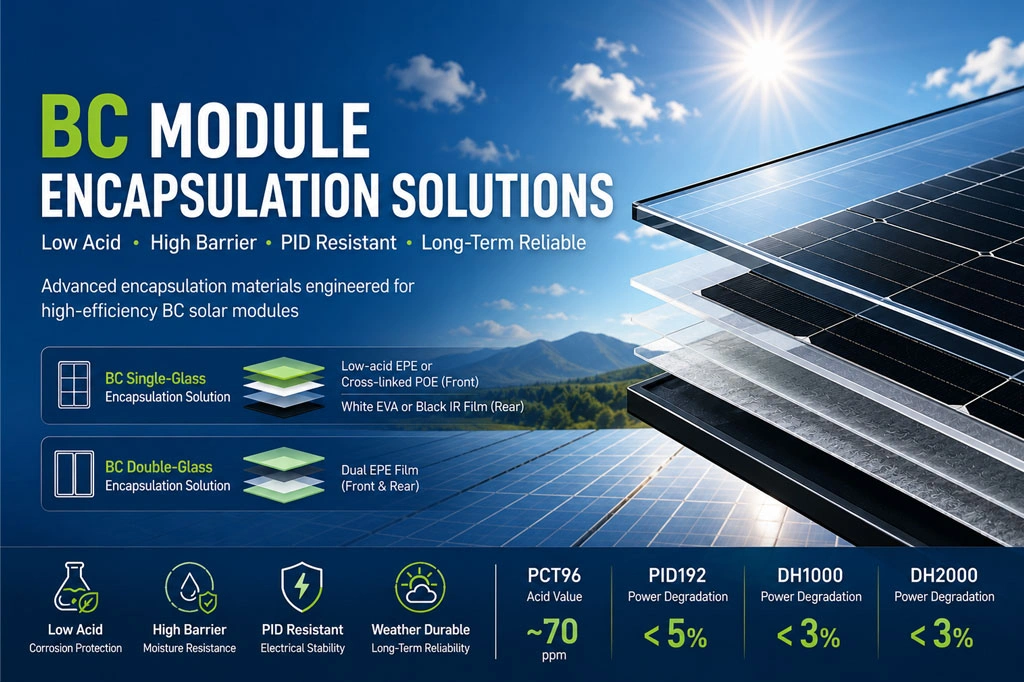
To meet these requirements, advanced BC encapsulation solutions must go beyond conventional protection. Through the combination of low-acid encapsulation films and high-barrier materials, Betterial has developed dedicated encapsulation solutions for both single-glass and double-glass BC modules.
Betterial’s BC Module Encapsulation Solution
Betterial has developed a high-performance encapsulation solution designed around the reliability requirements of BC modules.
The solution combines a low-acid encapsulant film system with high-barrier materials, helping improve module stability under damp heat, Potential Induced Degradation (PID), and long-term operating conditions.
Rather than using the same material combination for every module structure, the solution is optimized according to whether the BC module uses a single-glass or double-glass configuration.
Key objectives include:
Low acid generation
Controlling acid generation helps reduce the potential risk of corrosion during prolonged exposure to heat and humidity.
Strong moisture barrier performance
Reducing moisture penetration helps protect sensitive internal module components and supports long-term electrical stability.
Excellent PID resistance
Advanced encapsulation materials can help limit ion migration and electrical polarization, reducing power degradation under high-voltage operating conditions.
Long-term weather resistance
BC modules are expected to operate outdoors for decades. Encapsulation materials must therefore maintain their mechanical, optical, and electrical properties under prolonged environmental aging.
Together, these characteristics provide an important material foundation for maintaining the long-term reliability and energy yield of high-efficiency BC modules.
BC Single-Glass Module Encapsulation Solution
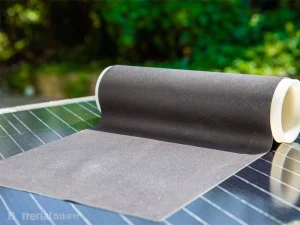
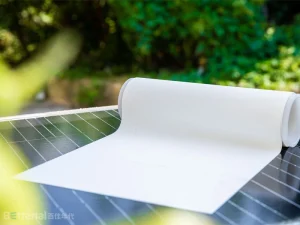
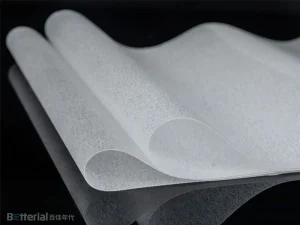
Betterial’s solution uses low-acid EPE or cross-linked POE film on the front side, while the rear side can use a white EVA encapsulation film or black infrared reflective encapsulation film.
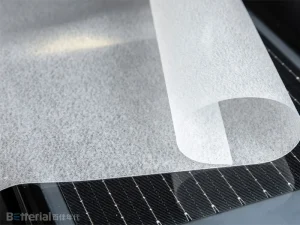
Front side:
Co-extruded EPE Film (B602M)
or
Cross-linking POE Film (B602)
Rear side:
White EVA Encapsulation Film (B601W)
or
Black Infrared Reflective Film (B601RS)
The white EVA option can provide an effective encapsulation solution for conventional module configurations, while the black infrared reflective film offers another option for modules where appearance and light-management requirements need to be considered.
Reliability testing demonstrates the stability of the solution. After PCT96 testing, the acid value remains around 70 ppm. After PID192 testing, module power degradation is below 5%, while degradation after DH1000 testing remains below 3%.
These results demonstrate how appropriate encapsulation material design can help BC single-glass modules withstand moisture, electrical stress, and accelerated environmental aging.
BC Double-Glass Module Encapsulation Solution
For BC double-glass modules, Betterial has introduced a dedicated dual-EPE encapsulation solution.
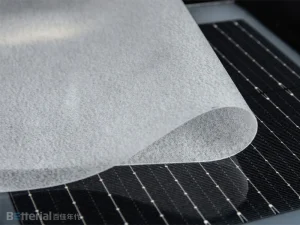
Front side:
Co-extruded EPE Film (B602M)
Rear side:
Co-extruded EPE Film (B602M)
Using EPE encapsulation film on both sides of the BC cell creates a balanced encapsulation structure.
Through low-acid EPE formulation and advanced manufacturing processes, the solution delivers strong performance in three important areas:
Corrosion resistance:
Low-acid characteristics help reduce the risk of chemically induced degradation during long-term aging.
Barrier properties:
The material system helps limit the penetration and migration of moisture and other substances that could affect cell performance.
Anti-polarization performance:
Improved electrical stability helps protect BC modules against PID under high-voltage operating conditions.
The dual-EPE solution achieves less than 4% degradation after PID192 testing and less than 3% degradation after DH2000 testing, demonstrating strong stability under accelerated reliability testing.
Conclusion
By combining low-acid encapsulation films, strong barrier properties, PID resistance, corrosion protection, and long-term weather durability, Betterial’s BC module encapsulation solutions are designed to address the reliability requirements of next-generation BC modules.
Dedicated configurations for both single-glass and double-glass modules allow manufacturers to select appropriate combinations of EPE, POE, white EVA, and black infrared reflective encapsulation films according to module structure and performance requirements.