
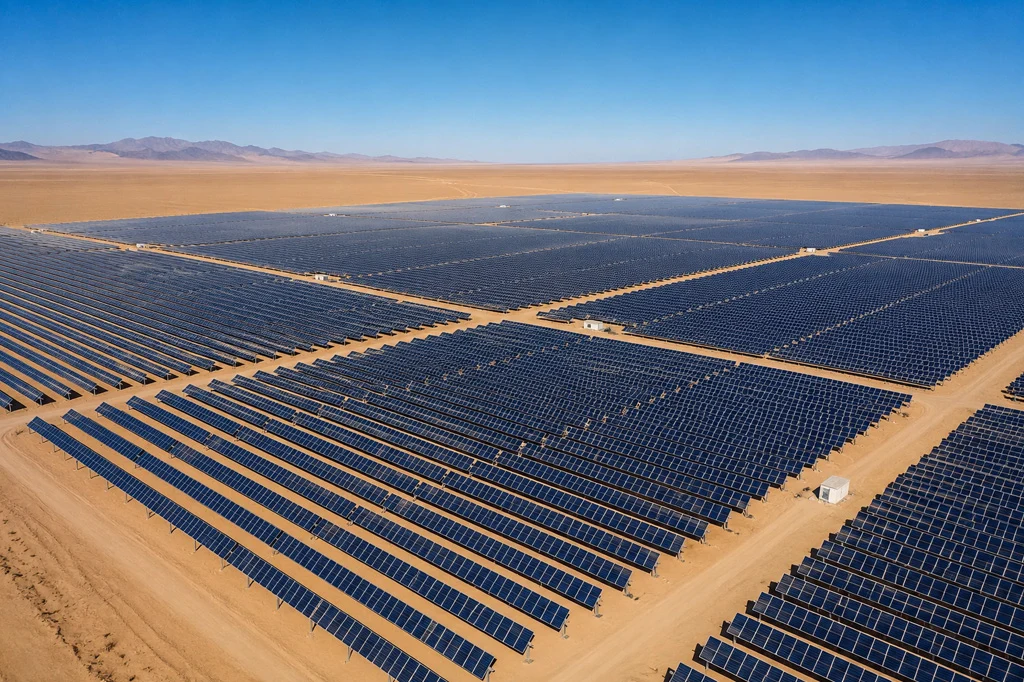
As a vital part of the global clean energy transition, the development of desert photovoltaic (PV) power plants offers tremendous growth potential and holds significant strategic importance.
However, photovoltaic modules deployed in desert environments must withstand extreme operating conditions, including high temperatures, intense ultraviolet (UV) radiation, dramatic day-to-night temperature fluctuations, and frequent sandstorms.
The Challenge: UV-Induced Degradation in TOPCon Modules
With continuous technological advancements and declining manufacturing costs, TOPCon (Tunnel Oxide Passivated Contact) technology has become one of the fastest-growing photovoltaic technologies worldwide.
However, desert environments receive prolonged sunshine and UV radiation levels that are typically two to three times higher than those in conventional climates. As TOPCon cell efficiencies continue to improve—already exceeding 26% in laboratory testing—their passivation layers have become increasingly sensitive to ultraviolet exposure.
According to relevant studies, intense UV irradiation can break the Si–H bonds within the passivation layer of solar cells, leading to passivation degradation and reduced cell performance. At the same time, it can trigger Ultraviolet-Induced Degradation (UVID) in TOPCon solar cells, resulting in module power loss.
The UV degradation issue associated with exposed TOPCon cells has attracted widespread attention and raised significant concerns across the photovoltaic industry.
Since encapsulation film is one of the key materials determining module lifetime and power stability, the extreme UV radiation, high temperatures, and arid conditions found in desert environments demand significantly higher encapsulation performance.
Industry experts have emphasized that developing encapsulation materials specifically designed for high-irradiance environments has become an urgent priority.
As a global leader in photovoltaic encapsulation materials, Betterial’s R&D team has leveraged years of expertise in polymer materials to develop a specialized encapsulation film solution for desert environments through cross-disciplinary innovation in material chemistry and optical engineering.
Betterial Desert Encapsulation Film
Betterial’s Desert-Specific Encapsulation Film Solution innovatively integrates three core advantages to effectively address UV protection challenges in photovoltaic modules.
1. Dynamic UV Cut-Off Technology
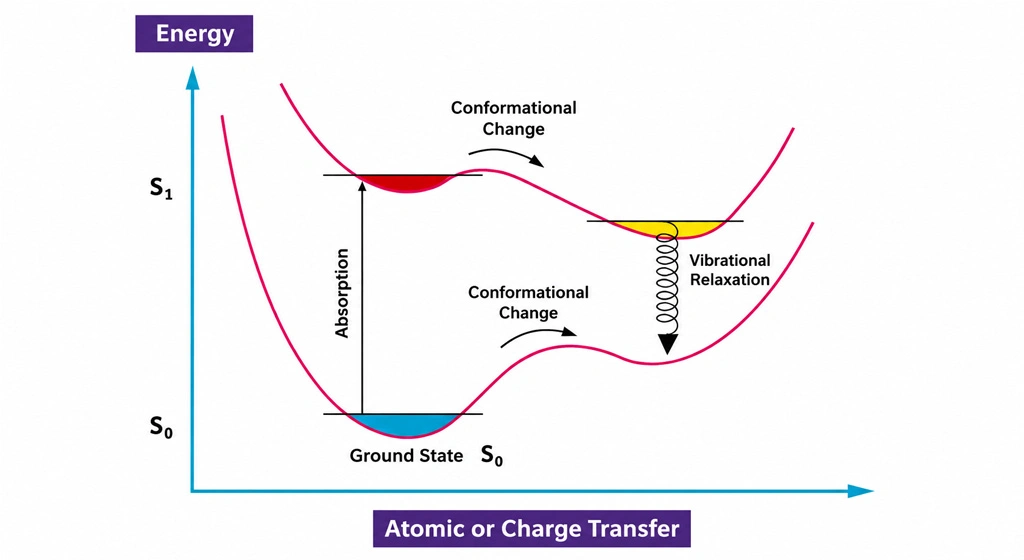
Through molecular structure design, a dynamic hydrogen-bonding network is constructed within the luminescent material of the encapsulation film. Under UV irradiation, this network triggers a photoisomerization–vibrational relaxation mechanism, converting high-energy photons into lower-energy states for controlled energy release.
The entire process occurs without generating free radicals, ensuring that the encapsulation film maintains long-term performance stability under prolonged UV exposure.
Through molecular engineering, Betterial has constructed a dynamic hydrogen-bond network within the film’s functional luminescent materials.
When exposed to ultraviolet radiation, the material activates a photoisomerization–vibrational relaxation mechanism, converting high-energy UV photons into lower-energy states without generating free radicals.
As a result, the encapsulation film maintains long-term stability even under continuous UV exposure.
Laboratory testing demonstrates:
- More than 95% UV blocking below 320 nm (covering the UVC and UVB spectrum)
- Over 90% visible light transmittance above 355 nm
This enables the film to effectively block harmful ultraviolet radiation while maximizing transmission of useful solar energy for electricity generation.
2. Customized Spectral Matching Solution
To address the varying UV resistance of different TOPCon cell manufacturing processes, Betterial has developed multiple UV cut-off solutions, including:
- 320 nm
- 330 nm
- 340 nm
- 350 nm
Using the flagship 320 nm cut-off film as an example, module power degradation remains below 4% after accelerated UV220 aging tests.
Compared with conventional encapsulation films, the solution can theoretically increase lifetime energy generation by more than 20%.
3. Enhanced Reliability Across All Environments
Beyond its core UV protection capability, the encapsulation film also delivers enhanced performance through optimized resin formulation and additive engineering:
- Superior Extreme-Temperature Resistance: Heat resistance is improved by 30%, no delamination or yellowing after 900 thermal cycles (TC900) from -40°C to 120°C.
- Enhanced Adhesion Protection: A proprietary coupling agent increases the crosslinking density of the encapsulation film, boosting glass adhesion strength by 25% to effectively withstand sand abrasion and damp heat aging (successful completion of the DH3000 reliability test).
- Optimized PID Resistance: Sodium ion migration is suppressed by 99.8%, ensuring the long-term reliability of PV modules operating in arid, high-salinity, and alkaline environments.
Economic and Environmental Benefits
As TOPCon technology continues to expand into a wider range of applications, reports of power degradation in TOPCon solar cells have become increasingly common.
According to industry media reports, many end users have observed uneven brightness in the electroluminescence (EL) images of TOPCon modules. Even modules that initially exhibit good EL performance often experience significant power degradation over time, with actual performance falling well below expectations.
This not only substantially reduces the efficiency and stability of photovoltaic power generation but also causes considerable economic losses and frustration for customers, leading to a growing number of complaints.
According to RETC testing, some TOPCon modules experienced a power degradation of 5% or more after exposure to 220 kWh/m² of ultraviolet (UV) irradiation. In desert environments, unprotected TOPCon modules can suffer 10%–16% power degradation after three years of operation, significantly reducing lifetime energy yield and potentially resulting in project revenue losses amounting to hundreds of millions of dollars for large-scale solar power plants.
Addressing the series of issues caused by UV-induced degradation in TOPCon solar cells, Betterial’s Technical Director stated:
“Our goal is not only to solve technical challenges, but also to deliver tangible financial returns for our customers.”
According to Betterial’s estimates, one 1 GW photovoltaic power plant utilizing Betterial’s Desert-Specific Encapsulation Film can reduce power generation losses caused by UV degradation by more than 500 million kWh over its 25-year service life, equivalent to reducing approximately 400,000 metric tons of CO₂ emissions. Combined with the annual equivalent full-load hours exceeding 1,800 kWh/kW in desert regions, the project’s Internal Rate of Return (IRR) can potentially increase by 2–3 percentage points.
Betterial technical director further noted:
“This product has been certified by internationally recognized organizations such as TÜV and CPVT. It has also completed field validation through the CPVT Northwest China Demonstration Program and has been successfully deployed in multiple hundred-megawatt-scale desert photovoltaic projects across Northwest China, the Middle East, and Africa.”
Supporting the Future of Desert Photovoltaics
In recent years, the construction of desert photovoltaic power plants has grown rapidly worldwide. The large-scale adoption of Betterial’s Desert PV Encapsulation Film has significantly enhanced the reliability and performance of these projects by extending service life, improving power generation efficiency, and meeting the specialized encapsulation requirements of desert PV modules. It provides a strong foundation for the stable operation and high-efficiency performance of desert solar power plants, while enabling photovoltaic deployment in even harsher environments. Ultimately, it supports the implementation of the integrated “solar power generation + desertification control + ecological restoration” development model.
Looking ahead, Betterial will continue to strengthen its innovation in new products and technologies, continuously enhance its supporting service capabilities, and deliver more stable, reliable, and high-value material solutions to customers worldwide. Betterial is committed to contributing to the global energy transition and the achievement of carbon neutrality goals.