
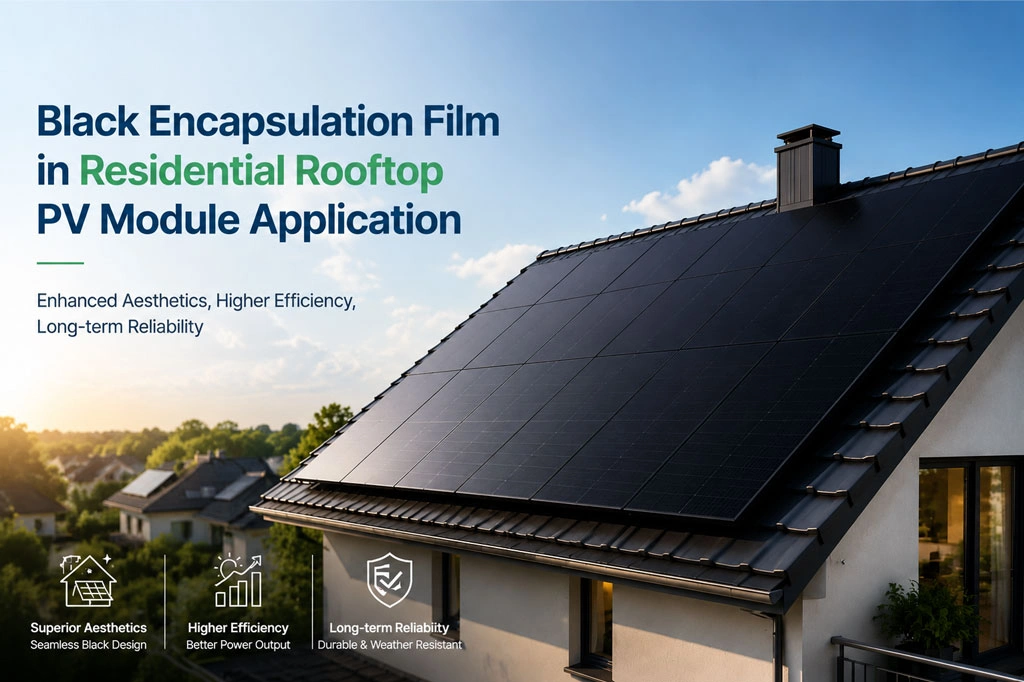
For decades, residential solar installations were primarily evaluated by technical parameters such as power output, efficiency, and durability. However, as rooftop photovoltaics (PV) become increasingly integrated into modern architecture, homeowners are demanding more than energy generation — they expect solar modules to complement the visual style of their homes.
This shift has accelerated the development of aesthetic photovoltaic solutions, including all-black solar modules, black back-side designs, black frames, and most importantly, black encapsulation films.
Unlike traditional transparent encapsulation films, black encapsulation films create a more uniform, elegant appearance. They help solar modules blend seamlessly with dark roofs, contemporary architecture, and premium residential designs.
The evolution of black encapsulation materials demonstrates an important trend:
Future residential PV modules must not only generate clean energy but also become an integrated part of architectural aesthetics.
1. Why Aesthetics Matter in Residential Rooftop PV
Unlike utility-scale solar farms, residential photovoltaic systems are installed directly on living spaces. The appearance of solar panels can significantly influence homeowners’ purchasing decisions.
Traditional PV modules often have visible features:
- Silver aluminum frames
- White grid lines
- Bright cell gaps
- Reflective surfaces
- Color differences between cells
Although these designs provide excellent energy performance, they may conflict with:
- Dark ceramic roofs
- Modern minimalist architecture
- Luxury villas
- Historic residential areas
- Premium building designs
For many homeowners, the question is no longer:
“Can solar panels produce enough electricity?”
Instead, the question becomes:
“Can solar panels improve my home without affecting its appearance?”
This change in consumer expectations is driving demand for aesthetically optimized PV technologies.
2. How Black Encapsulation Film Creates an All-Black Appearance
The encapsulation film is a critical layer inside a photovoltaic module. Traditionally, these films are transparent to maximize light transmission into the solar cells.
However, black encapsulation films introduce controlled optical properties that modify the visual appearance of the module.
The main aesthetic effects include:
2.1 Eliminating Visible Cell Gaps
In conventional modules, the spaces between solar cells appear as bright lines because of the white background or transparent encapsulation structure.
Black encapsulation films reduce this contrast by:
- Absorbing scattered light
- Creating a consistent dark background
- Minimizing visual interruptions between cells
The result is a smoother, more continuous black surface.
2.2 Creating Uniform Color Appearance
Residential rooftops often use dark materials such as:
- Black metal roofs
- Dark slate tiles
- Charcoal shingles
A standard PV module may appear visually disconnected due to differences in color and reflection.
Black encapsulation film helps achieve:
- Better color matching
- Reduced visual contrast
- More premium appearance
This allows solar modules to function as part of the building envelope rather than simply being attached equipment.
2.3 Supporting Full-Black Module Designs
Modern all-black PV modules typically combine several aesthetic technologies:
| Component | Function |
|---|---|
| Black encapsulation film | Creates uniform dark appearance |
| Black frame | Reduces metallic contrast |
| Dark solar cells | Improves visual consistency |
Together, these technologies create the “all-black solar panel” appearance increasingly preferred in residential markets.
3. Balancing Aesthetics and Power Performance
One of the biggest challenges of black encapsulation films is balancing appearance with energy efficiency.
Traditional transparent encapsulation materials allow maximum sunlight transmission.
However, black materials may absorb part of the incoming light, potentially reducing module output if not carefully engineered.
Advanced black encapsulation films address this challenge through:
3.1 Optical Engineering
Manufacturers optimize:
- Pigment distribution
- Surface reflection
The goal is not simply making the film darker, but achieving the optimal balance between:
Visual uniformity + optical efficiency
4. Why Black Encapsulation Film Is Especially Valuable for Residential PV
4.1 Premium Housing Market
High-end residential customers often consider rooftop solar as part of home design.
For luxury homes, architectural projects, and designer residences, appearance can influence purchasing decisions as much as electricity savings.
Black encapsulation film enables PV manufacturers to offer:
- Premium solar products
- Architectural integration
- Higher-value solutions
4.2 Urban Solar Applications
In densely populated urban areas, rooftop appearance becomes increasingly important.
Cities with strict architectural requirements may prefer solar solutions that:
- Match existing buildings
- Reduce visual impact
- Preserve neighborhood aesthetics
Black PV modules provide a practical solution for integrating renewable energy into urban environments.
4.3 Building-Integrated Photovoltaics (BIPV)
The development of BIPV requires solar modules to become construction materials.
Unlike traditional PV installations, BIPV applications demand:
- Color customization
- Surface consistency
- Architectural compatibility
Black encapsulation film represents an important step toward solar modules becoming visually integrated building components.
5. The Future: From Solar Panels to Solar Architecture
The development of black encapsulation films reflects a broader transformation in the photovoltaic industry.
Solar modules are moving from:
Energy equipment → Architectural elements
Future residential PV products will increasingly focus on:
- Customized colors
- Invisible integration
- Flexible designs
- Improved aesthetics
- Higher architectural value
Black encapsulation film is not simply a cosmetic upgrade. It represents the convergence of photovoltaic technology, material science, and architectural design.
Conclusion
As residential solar adoption continues worldwide, aesthetics will become an increasingly important factor in PV product selection.
Our black encapsulation films include IR-reflective and visible black types that can increase power comparatively. They provide a powerful solution by creating visually appealing all-black solar modules while maintaining the durability and reliability required for long-term operation.
The future of rooftop photovoltaics is not only about producing more electricity — it is about creating solar solutions that homeowners are proud to install.