
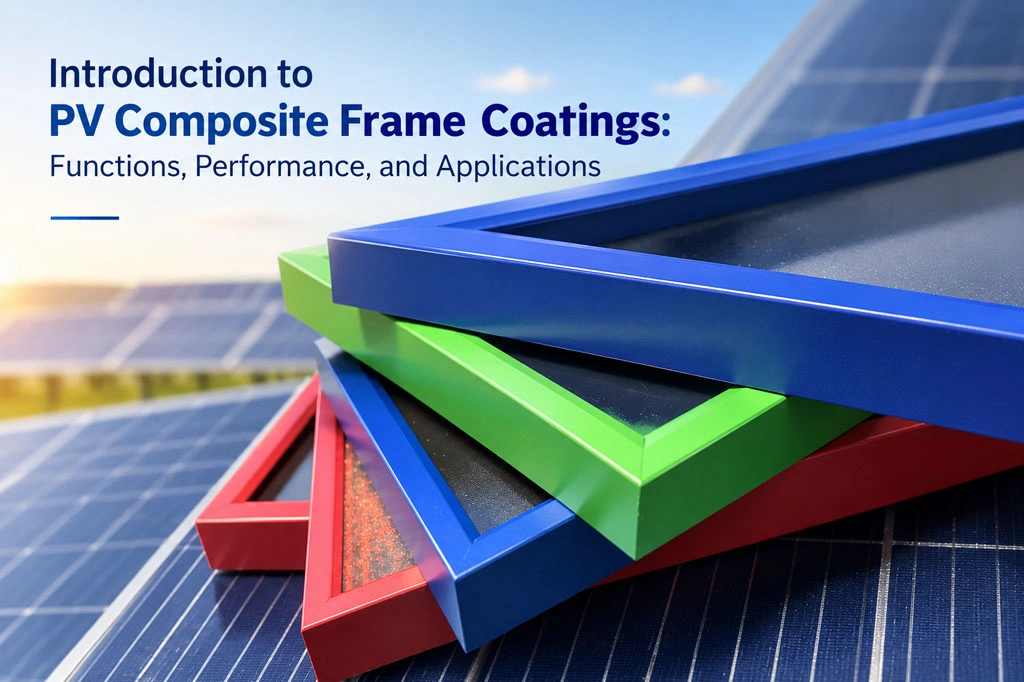
As photovoltaic modules continue to evolve toward higher power output, lighter weight, lower cost, and greater long-term reliability, frame materials are also undergoing continuous innovation alongside solar cells, encapsulation films, glass, and backsheets.
Traditional PV modules primarily use aluminum alloy frames. In recent years, however, PV composite frames made from materials such as glass-fiber-reinforced polymers have attracted increasing attention. Composite frames offer advantages such as lightweight construction, high mechanical strength, electrical insulation, and corrosion resistance, and they are gradually being adopted in distributed PV systems, utility-scale solar projects, and certain demanding application environments.
However, PV composite frames must remain exposed for long periods to complex outdoor conditions, including ultraviolet radiation, high temperatures, high humidity, salt spray, wind-blown sand, and large day-night temperature variations. Therefore, the composite material itself may not be sufficient to address all long-term reliability challenges.
To provide additional surface protection, PV composite frame coatings have become an important functional layer within composite frame material systems.
What Is a PV Composite Frame Coating?
A PV composite frame coating is a type of functional surface coating specifically developed for photovoltaic frame substrates such as glass-fiber-reinforced composite materials.
After application and curing, the coating forms a continuous protective film on the outer surface of the composite frame, helping isolate and protect the underlying substrate. It is not intended to replace the composite frame material itself, but rather to serve as a protective and aesthetic surface layer.
For PV modules designed for decades of outdoor operation, this coating layer typically needs to perform several functions:
- Improve the weather resistance of composite frames;
- Reduce the effects of long-term ultraviolet exposure on the surface;
- Improve resistance to salt spray and corrosion;
- Increase surface hardness and scratch resistance;
- Improve frame color consistency and overall appearance;
- Provide different color and gloss options;
- Help composite frames adapt to more demanding photovoltaic application environments.
In this sense, composite frame coatings serve as an important material link between the structural performance of composite materials and the long-term outdoor reliability of PV modules.
Why Do PV Composite Frames Need Coatings?
1. Improving Long-Term Outdoor Weather Resistance
Photovoltaic modules are generally expected to operate outdoors for several decades.
During long-term service, module frames may be continuously exposed to ultraviolet radiation, temperature cycling, rain, damp heat, and other environmental factors.
For resin-based composite materials in particular, prolonged UV exposure can place additional demands on material durability. Proper material formulation and surface protection systems are therefore important for reducing long-term aging risks.
A weather-resistant coating can form a protective barrier over the frame surface, helping improve the stability of composite frames under prolonged outdoor exposure.
2. Improving Corrosion and Salt Spray Resistance
As photovoltaic systems expand into a wider variety of environments, modules may be installed in coastal areas, near lakes, in high-humidity regions, or in industrial environments containing corrosive media.
These applications place higher demands on the corrosion resistance of module frame materials.
Composite materials already offer strong corrosion-resistance potential, while a high-performance surface coating can further improve protection against salt spray, damp heat, and corrosive substances. This makes coated composite frames particularly suitable for PV modules requiring enhanced environmental reliability.
Betterial’s weather-resistant coating system for composite frames has also been developed with demanding conditions such as high temperature, high humidity, salt spray, and wind-blown sand in mind.
3. Improving Scratch and Abrasion Resistance
From composite frame manufacturing to final PV module installation, the frame passes through multiple processes, including cutting, handling, stacking, packaging, transportation, and on-site installation.
If the frame surface does not have sufficient hardness, it may develop:
- Friction marks;
- Surface scratches;
- Localized abrasion;
- Impact damage.
Therefore, in addition to weather resistance, PV composite frame coatings also need to provide good surface mechanical properties.
Appropriate coating hardness, abrasion resistance, and scratch resistance help preserve the surface integrity of the frame throughout manufacturing, transportation, installation, and long-term use.
4. Improving PV Module Appearance
An increasing number of photovoltaic modules now use black frames to create a more consistent visual appearance with black solar cells, black backsheets, and other dark-colored module materials.
As a result, composite frame coatings serve not only a protective function but also an aesthetic one.
Coatings can be used to control:
- Frame color;
- Surface gloss;
- Color difference;
- Overall appearance uniformity.
This is particularly important for all-black modules, rooftop photovoltaic systems, BIPV products, and other applications where appearance and architectural integration are important considerations.
Betterial WSD-3102 PV Composite Frame Coating
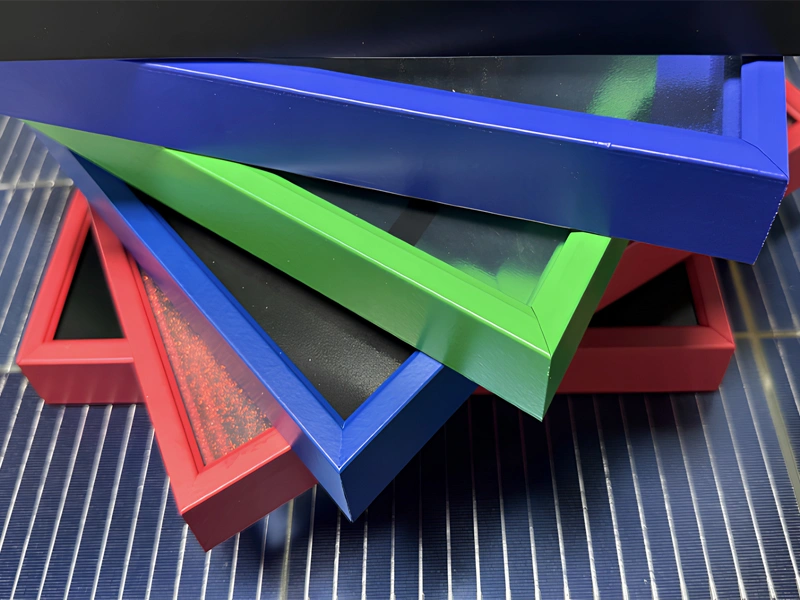
To meet the surface protection requirements of photovoltaic composite frames, Betterial has developed the WSD-3102 PV Composite Frame Coating.
WSD-3102 is a two-component, water-based acrylic weather-resistant coating consisting of Components A and B. Component A uses a water-based formulation, while Component B contains a polyisocyanate adduct that functions as the curing agent.
The product is primarily designed for weather-resistant surface coating of glass-fiber-reinforced composite materials and metal components. It features relatively low substrate pretreatment requirements, a high-quality surface appearance, and adjustable gloss.
Some typical performance specifications of WSD-3102 include:
| Performance Item | Typical Specification |
|---|---|
| Coating Color | Black |
| Solid Content of Components A/B | 45±2% / 57±2% |
| Color Difference | ≤2 |
| Coating Viscosity at 25°C | 70–75 KU |
| Adhesion, 1 mm Cross-Cut Test | Grade 0 |
| 60° Gloss | 25–30 |
| Hardness | ≥2H |
| Recommended Dry Film Thickness | 30±5 μm |
What Applications Are Suitable for PV Composite Frame Coatings?
As composite frame adoption continues to expand, weather-resistant coatings can be used in a wide range of photovoltaic applications.
Utility-Scale Ground-Mounted Solar Plants
PV modules in utility-scale projects are continuously exposed to ultraviolet radiation, rain, temperature fluctuations, and outdoor pollutants. These applications therefore require coatings with strong overall weather resistance.
Coastal and High-Salt-Spray Environments
Salt spray and high humidity place stricter reliability requirements on peripheral PV module materials. In these environments, particular attention should be given to coating salt-spray resistance and corrosion protection.
Desert and Wind-Blown Sand Environments
In addition to strong ultraviolet radiation and high temperatures, desert environments can subject module frames to repeated abrasion from wind-blown sand. Coating hardness and wear resistance therefore become especially important.
Distributed Rooftop Photovoltaic Systems
In addition to long-term reliability, rooftop PV systems are placing increasing emphasis on lightweight design and overall appearance. Composite frames combined with functional surface coatings offer new possibilities for PV module material design.
BIPV and Appearance-Oriented PV Modules
Building-integrated photovoltaics place higher requirements on color, gloss, and overall visual coordination. Surface coatings provide greater flexibility in the color and appearance design of composite PV frames.